Chicken Foot Dominoes Rules: How to Play (with a Double-Six Set)
Nov 9, 2026 · The Editors
Chicken foot dominoes rules step by step: how many tiles to start with, the opening double, building the chicken foot, drawing and blocking, scoring, how it differs from Mexican train, and playing with a double-six set.
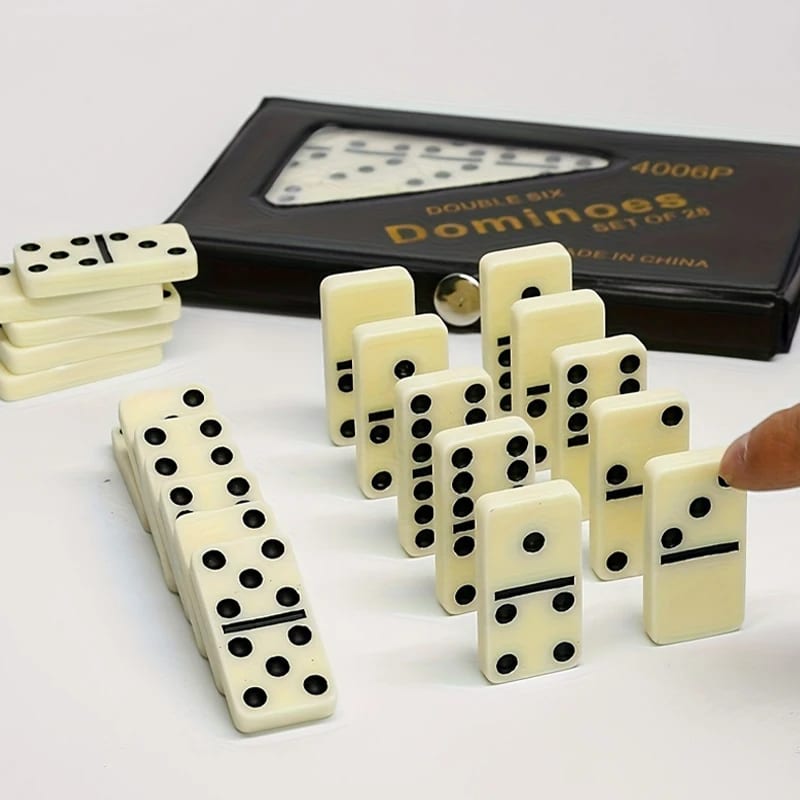
Chicken foot is a domino game named after its signature move: every double played must be covered by three tiles fanned out like a bird's foot before anyone can play anywhere else. It is easy to learn, plays well with a crowd, and gets surprisingly tactical as players try to trap each other with doubles.
What you need
Chicken foot is traditionally played with a double-nine set (55 tiles) for up to eight players, and the rounds count down from the double-nine. It also works well with an ordinary double-six set (28 tiles) for two to four players — the rules are the same and the game is shorter. A score pad and pen complete the kit.
How many tiles to start with
House rules vary, so agree before you start. Common choices:
| Set | Players | Tiles each |
|---|---|---|
| Double-six | 2 | 7 |
| Double-six | 3–4 | 5 or 6 |
| Double-nine | 2–4 | 9 to 11 |
| Double-nine | 5–8 | 6 to 8 |
The rest stay face down as the boneyard, for drawing.
Chicken foot dominoes rules, step by step
1. The opening double. In the first round, the player holding the highest double (double-six in a double-six set) places it in the centre. If nobody holds it, everyone draws one tile in turn until it appears. Each new round starts with the next double down.
2. Arms around the first double. Players take turns adding tiles that match the centre double — in most rules, until six tiles (some tables use four) radiate from it. No other play is allowed until the centre is complete.
3. Building lines. After that, play continues clockwise. On your turn you add one tile to the open end of any line, matching the number.
4. The chicken foot. When someone plays a double, it is placed crossways. Before any other play can be made anywhere, three tiles must be played on the far side of it, angled out like a chicken's toes. Whoever is next must add to the foot; if they cannot, they draw.
5. Drawing and passing. If you cannot play, draw one tile from the boneyard. Play it if you can; otherwise, pass.
6. End of the round. The round ends when a player plays their last tile, or when nobody can play and the boneyard is empty.
How chicken foot is scored
At the end of each round, everyone counts the pips on the tiles left in their hand. Those are their points for the round, and lower is better. Many tables make the double-blank worth 50 points if it is caught in a hand, which makes it a dangerous tile to hold.
After all rounds — one for each double, from the highest down to double-blank — the player with the lowest total wins.
Chicken foot vs Mexican train
| Chicken foot | Mexican train | |
|---|---|---|
| Layout | One shared, branching layout | A personal train for each player plus a shared train |
| Doubles | Force a three-tile "foot" | Must be covered by one tile |
| Best set | Double-nine | Double-twelve |
| Feel | Tactical trapping with doubles | Races and protecting your own train |
Both games share the countdown of doubles and the "lowest pips wins" scoring. See Mexican train dominoes rules for the other one.
Tips for winning
Play your high tiles early, so they are not stuck in your hand if the round ends suddenly. Hold a double for the moment it hurts most: playing it when the next player is low on tiles can force them to draw. And watch which numbers have been played — if most of the fives are gone, a five-ended double is a trap you can spring.
A double-six domino set is all you need to start. For other games with the same set, see domino games and how to play dominoes.