Spider Solitaire Rules: How to Play with Real Cards
Nov 13, 2026 · The Editors
Spider solitaire rules with real cards: the two-deck setup, building down, moving runs, dealing from the stock, and how to play the one-suit, two-suit and one-deck versions at a table.
Spider solitaire is a two-deck patience game: you build cards down in columns and win by assembling all eight suits in order from King to Ace. It is famous as a computer game, but it is just as good with real cards on a table.
Spider solitaire setup
You need two standard decks (104 cards, no jokers), ideally with the same backs.
- Deal ten columns in a row. The first four columns get six cards; the other six get five cards. That is 54 cards.
- Only the top card of each column is face up.
- The remaining 50 cards form the stock, face down.
How to play
- Build down. You may place any card on a card one rank higher, of any suit: a 7 of hearts on an 8 of clubs is allowed.
- Move runs only in suit. A sequence of cards can be moved together only if it is all one suit and in order. Mixed-suit runs must be taken apart one card at a time.
- Turn up cards. When a face-down card is uncovered, turn it face up.
- Empty columns can take any card or any same-suit run, not just a King.
- Deal from the stock. When you are stuck, deal one card face up onto each of the ten columns. There are five such deals. You may not deal while any column is empty.
Completing a suit and winning
When you build a full run from King down to Ace in one suit, remove it from the table. Clear all eight runs — two of each suit — and you have won.
Spider solitaire one suit and two suits
Computer versions offer one suit, two suits and four suits. The computer gets one-suit spider by using eight copies of spades. With real cards you can play the easier versions by changing what counts as "the same suit":
| Version | With real cards | Difficulty |
|---|---|---|
| One suit | Treat every card as the same suit | Easy — most games can be won |
| Two suits | Treat all reds as one suit and all blacks as another | Medium |
| Four suits | Play the suits as they are | Hard — many games are lost |
Spider solitaire rules with one deck
The one-deck version is often called Spiderette. Deal seven columns as in classic solitaire — one card in the first, two in the second, up to seven — with only the top card face up. The other 24 cards are the stock, dealt seven at a time, one to each column. The rules are otherwise the same, and you win by completing all four suits.
Tips
- Uncover face-down cards first. Every hidden card is information you do not have.
- Empty a column when you can. An empty column is the most powerful thing on the table.
- Build in suit when you have a choice. A same-suit run can move later; a mixed one is stuck.
- Before each stock deal, make as many tidy runs as possible, because the deal will cover every column.
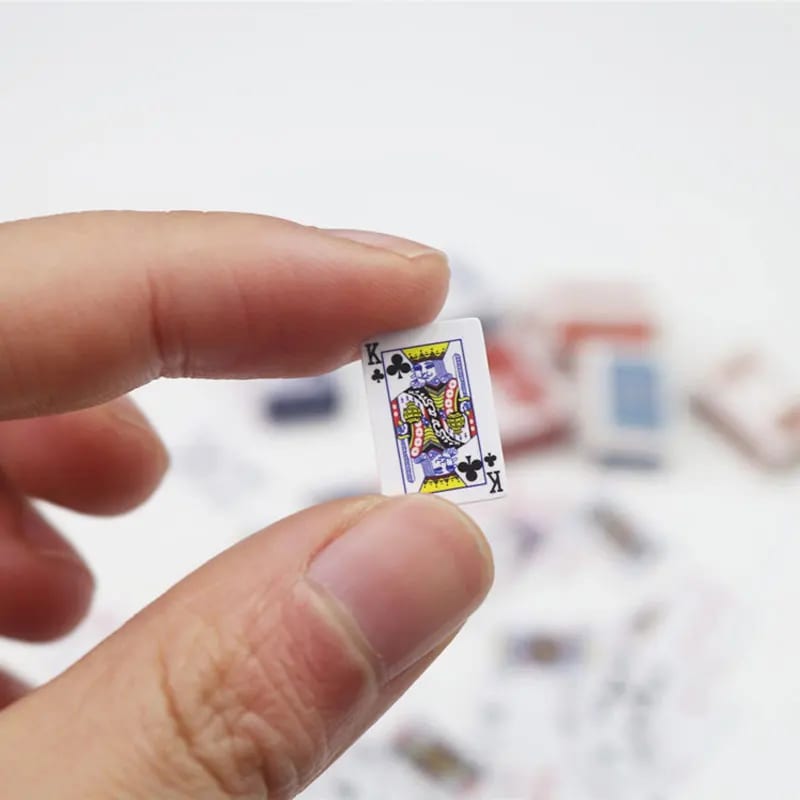
For the classic one-deck game, see how to play solitaire; for another variant, pyramid solitaire. Two small decks fit a ten-column layout on an ordinary table, which is where mini playing cards earn their place.
Frequently asked questions
How many cards do you deal in spider solitaire?
Fifty-four cards in ten columns: six in each of the first four columns and five in each of the other six. The other 50 cards are the stock.
Can you play spider solitaire with one deck?
Yes. The one-deck version, often called Spiderette, uses seven columns laid out like classic solitaire and a stock dealt seven cards at a time.
Can you put any card in an empty column in spider solitaire?
Yes. Unlike classic solitaire, an empty column takes any card or any same-suit run, not only a King.
How do you win spider solitaire?
Build eight complete runs from King down to Ace, each in a single suit, and remove them from the table.