Small Blind, Big Blind and the Dealer Button Explained
Nov 4, 2026 · The Editors
Who posts which blind, why the dealer button moves, who acts first before and after the flop, and how blinds work heads-up.
In Texas Hold'em and Omaha, every hand starts with two forced bets called blinds, and a marker called the dealer button decides who pays them. Blinds are what make every pot worth fighting for: without them, everyone could simply wait for aces.
The dealer button
The dealer button is a disc that marks the player in the dealer position for the hand. In a home game that player may actually deal; in a casino a professional dealer does, and the button just marks the position.
After each hand the button moves one seat to the left (clockwise), so everyone takes a turn in every position.
The blinds
- The small blind is posted by the player directly to the left of the button.
- The big blind is posted by the player to the left of the small blind.
The big blind is usually twice the small blind: 1 and 2, or 25 and 50. These are bets made before anyone sees their cards — "blind".
Who acts first
Before the flop, action starts with the player to the left of the big blind — a seat called under the gun — and goes clockwise. The big blind acts last before the flop, and can raise even if everyone has just called.
After the flop, and on every later round, action starts with the first player still in the hand to the left of the button, usually the small blind. The button acts last, which is why the button is the best seat at the table: you see what everyone does before you decide.
Heads-up: two players
With only two players, the order changes. The player on the button posts the small blind and acts first before the flop, then last on every later round. The other player posts the big blind.
Blinds in tournaments and cash games
- In a cash game, the blinds stay the same all night.
- In a tournament, the blinds go up at set intervals — every fifteen or twenty minutes in a home game. Rising blinds force the action and make sure the tournament ends.
Many tournaments add an ante at higher levels: a small bet from every player, or one big-blind ante paid by the big blind for the whole table.
Marking it at home
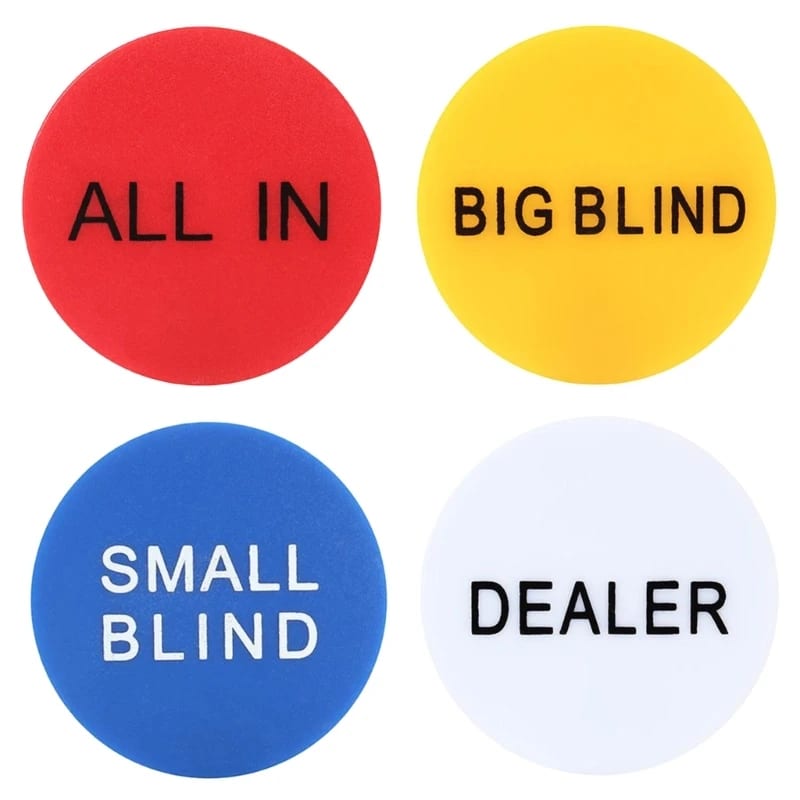
A dealer button with small blind and big blind buttons beside it ends every argument about whose turn it is to post. The button moves left, the blind buttons move with it, and the game runs itself. An all-in button to slam down when you push is optional, and very satisfying.
Mentioned above