Side Pot Poker Rules: How Main and Side Pots Work
Nov 23, 2026 · The Editors
How side pots work in poker when a player goes all in: how to split the chips into a main pot and side pots, who can win which, with worked examples.

A side pot is created when a player goes all in for less than the other players are betting. The all-in player can win only the main pot, which holds what they could match from each player. Any extra chips the others bet go into a side pot that only they can win.
Why side pots exist
In table stakes poker, the rule in almost every home and card room game, you can only bet the chips in front of you. You can never be forced out of a hand for lack of chips, but you also cannot win more from each opponent than you put in yourself. Side pots are how the dealer keeps both promises. See all in poker rules for the all-in bet itself.
How to make a side pot, step by step
- Find the smallest all-in amount. That is the most each player can contribute to the main pot.
- Take that amount from every player still in the hand (or all they have, if less) and put it in the main pot.
- Everything left over goes into a side pot.
- If another player is also all in for less than the rest, repeat: make a second side pot above the first.
- At the showdown, settle the last side pot first, then work back to the main pot.
Side pot example with three players
Ann has 50 chips and goes all in. Ben and Cal both have plenty, and both call 150.
| Pot | Who paid in | Size | Who can win it |
|---|---|---|---|
| Main pot | Ann 50, Ben 50, Cal 50 | 150 | Ann, Ben or Cal |
| Side pot | Ben 100, Cal 100 | 200 | Ben or Cal only |
At the showdown, compare Ben's and Cal's hands for the side pot. Then compare all three for the main pot. If Ann has the best hand of all, she wins the 150 in the main pot, and the side pot goes to the better of Ben and Cal.
Two players all in: more than one side pot
Ann goes all in for 50, Ben goes all in for 120, and Cal calls 200.
| Pot | Contributions | Size | Eligible |
|---|---|---|---|
| Main pot | 50 × 3 | 150 | Ann, Ben, Cal |
| Side pot 1 | 70 × 2 (Ben, Cal) | 140 | Ben, Cal |
| Side pot 2 | 80 (Cal only) | 80 | Returned to Cal |
The last 80 chips were matched by nobody, so they are not a pot at all. They go straight back to Cal.
Dry side pots
Once one player is all in and two or more players are still betting, any later betting goes into the side pot. If those players simply check to the end, the side pot is called dry. Many tournament players check a dry side pot down to give the all-in player the best chance of being knocked out, but that is a habit, not a rule. Openly agreeing to do it is collusion and is not allowed in most card rooms.
Tips for the dealer at a home game
- Build the pots as soon as the all-in happens, not at the end. Push the main pot into the middle and start the side pot beside it.
- Count out loud. Everyone at the table should agree on each pot before the next card.
- Odd chips in a split pot usually go to the first player to the left of the button. Agree on this before the night begins.
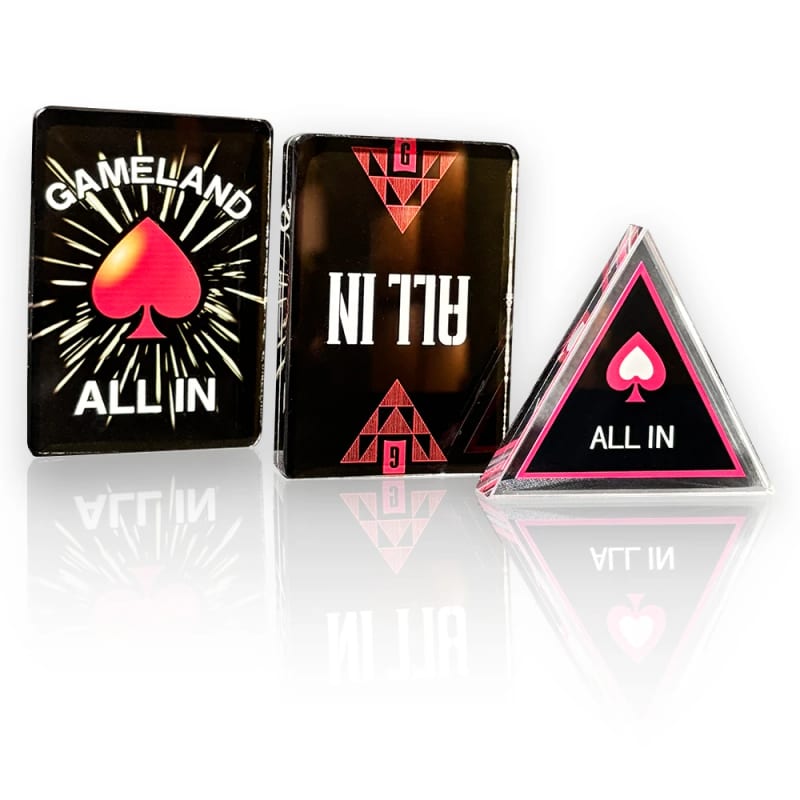
- A marker helps. An all in button in front of the all-in player reminds everyone which pots they can win.
For the rest of the dealer's job, see how to deal poker. Distinct chips make pots easier to count; heavy clay chips stack straight and stay put.
Frequently asked questions
What is a side pot in poker?
A separate pot for chips bet beyond what an all-in player could match. Only players who put chips into it can win it.
Can an all-in player win the side pot?
No. The all-in player can win only the main pot, which holds what they could match from each opponent.
Which pot is decided first at showdown?
The last side pot first, working back to the main pot. That way each pot is compared only among the players eligible for it.
What is a dry side pot?
A side pot with no chips in it, because the players still in the hand only checked after someone went all in.