Poker Size vs Bridge Size Playing Cards: The Difference
Nov 7, 2026 · The Editors
What is the difference between poker size and bridge size playing cards: the exact measurements, why bridge cards are narrower, which games each suits, standard and jumbo indices, and which to buy.
Playing cards come in two standard sizes, and most people never notice until they try to mix two decks. The difference is a quarter of an inch in width.
The measurements
| Width | Height | |
|---|---|---|
| Poker size | 2.5 in (63.5 mm) | 3.5 in (88.9 mm) |
| Bridge size | 2.25 in (57 mm) | 3.5 in (88.9 mm) |
Same height; bridge cards are a quarter of an inch narrower.
Why bridge cards are narrower
In bridge — and in spades, hearts and rummy — every player holds 13 cards or more in a fan. Narrower cards make a big hand easier to hold, especially for smaller hands.
Why poker cards are wider
In poker, players hold only a few cards — two in Texas hold'em — and the wider card is easier to deal, pick up from felt, and read face up on the table. Casinos and card rooms use poker size almost exclusively.
Which is more common?
In the United States, poker size is the standard: most decks in shops, most plastic decks and almost every themed or collectible deck. Bridge size is more common in Europe and for bridge clubs, where it is often sold in pairs.
Which should you buy?
- Poker, blackjack, casino games: poker size.
- Bridge, canasta, rummy, hearts, spades: either works. Bridge size if you hold big hands or have smaller hands; poker size if you want one deck for everything.
- Magic and cardistry: poker size, which is what nearly every trick and flourish is designed for.
- Mixing decks for two-deck games such as canasta: make sure both decks are the same size, or the odd one out is obvious.
Index size: standard vs jumbo
Size is one thing; the index — the number and suit in the corner — is another.
- Standard index: the traditional small corner number.
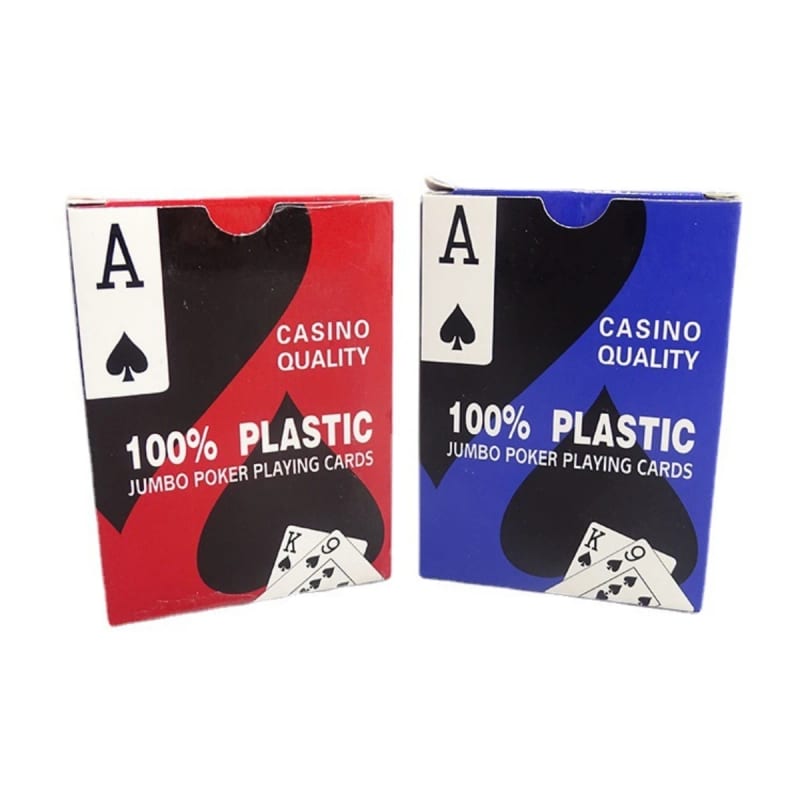
- Jumbo index: a much larger corner number, easy to read across the table, under dim light, or without reading glasses. Popular for poker and with older players.
Some decks have four indices — in all four corners — so they can be read whichever way they are fanned.
Paper or plastic
Separate from size: paper decks are cheaper and handle well for magic; plastic decks last many times longer, survive drinks and can be washed. For a home card table, plastic poker-size cards with the index you can read best are the safe choice.
Smaller cards
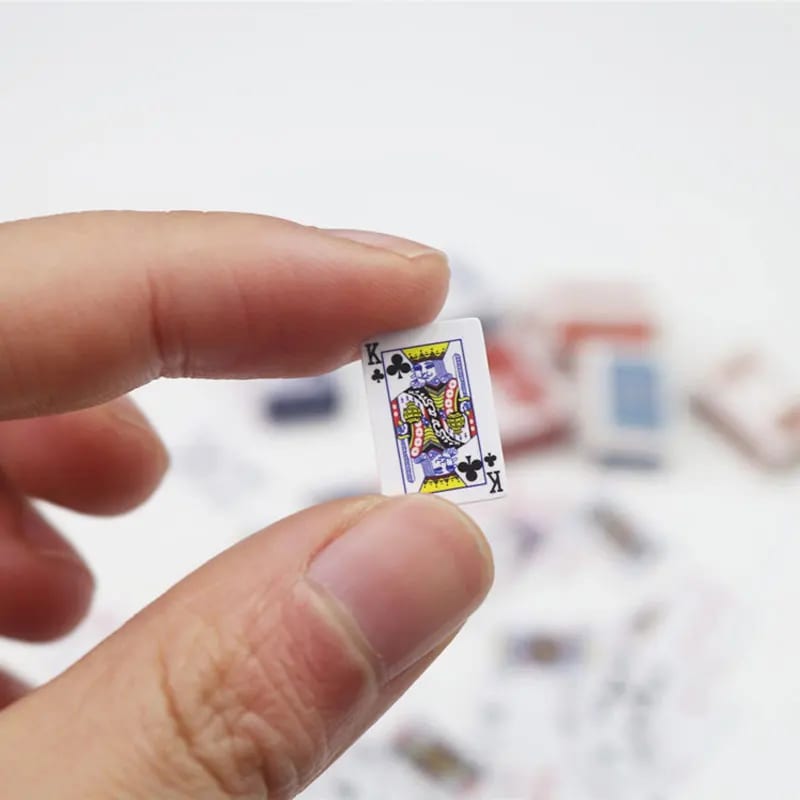
There are also patience or mini decks, about half the size of standard cards, made for solitaire on a small table or for carrying in a pocket.