How to Play Gin Rummy: Rules for 2 Players (and 3)
Nov 7, 2026 · The Editors
How to play gin rummy step by step: the deal, the first upcard, melds and deadwood, knocking, going gin, undercuts, laying off and scoring — plus how to play with three.
Gin rummy is the two-player card game: fast, a little ruthless, and better the more you play it. If you know basic rummy, the difference is that you never lay cards down until the hand is over — and you can end it before your hand is perfect.
The deal
Use one 52-card deck. Deal 10 cards each. Put the rest face down as the stock and turn the top card face up to start the discard pile.
The first upcard is special. The non-dealer may take it; if they decline, the dealer may take it. If both pass, the non-dealer draws from the stock and play carries on normally.
Melds and deadwood
As in rummy, you are building:
- Sets of three or four of a kind, and
- Runs of three or more in sequence, in one suit. Aces are low only — A-2-3 is a run, Q-K-A is not.
Cards that are not part of a meld are deadwood. Deadwood counts against you: face cards 10, Aces 1, other cards their number.
Each turn
- Draw the top card of the stock or the discard pile.
- Discard one card face up.
That is all — nobody lays anything down during play.
Ending the hand: knocking
When your deadwood totals 10 points or fewer, you may knock: discard face down, then lay out your melds and deadwood.
The opponent then lays out their hand and may lay off cards on your melds — adding a 5 to your 6-7-8 run, say — reducing their own deadwood.
- If you knock, you score the difference between the two deadwood totals.
- If the opponent's deadwood is equal to or lower than yours, that is an undercut: they score the difference plus a 25-point bonus.
Going gin
Knock with no deadwood at all and you have gone gin. The opponent may not lay off on your melds, you score their whole deadwood count plus a 25-point gin bonus, and they cannot undercut you.
If the stock runs low
When only two cards are left in the stock and nobody has knocked, the hand is a draw. Nobody scores; the same dealer deals again.
Winning the game
The first player to 100 points wins the game and adds a 100-point game bonus. Then each player adds 25 points for every hand they won (the "box" or "line" bonus). If the loser did not win a single hand, many players double the winner's score — a shutout or schneider.
Bonuses vary by house: 20 for gin and 10 for an undercut is an older standard. Agree before the first deal.
Gin rummy with 3 players
Gin is built for two. With three, the usual way is winner stays on: two play a hand while the third sits out and keeps score; the loser of each hand swaps out. Alternatively, the dealer deals to the other two and sits the hand out, and the deal passes on.
A few tips
- Knock early when the opponent is picking up from the discard pile — they are close.
- Discard high cards early if they are not part of anything.
- Watch what they pass on. A player who throws away the 7 of clubs is not collecting 7s.
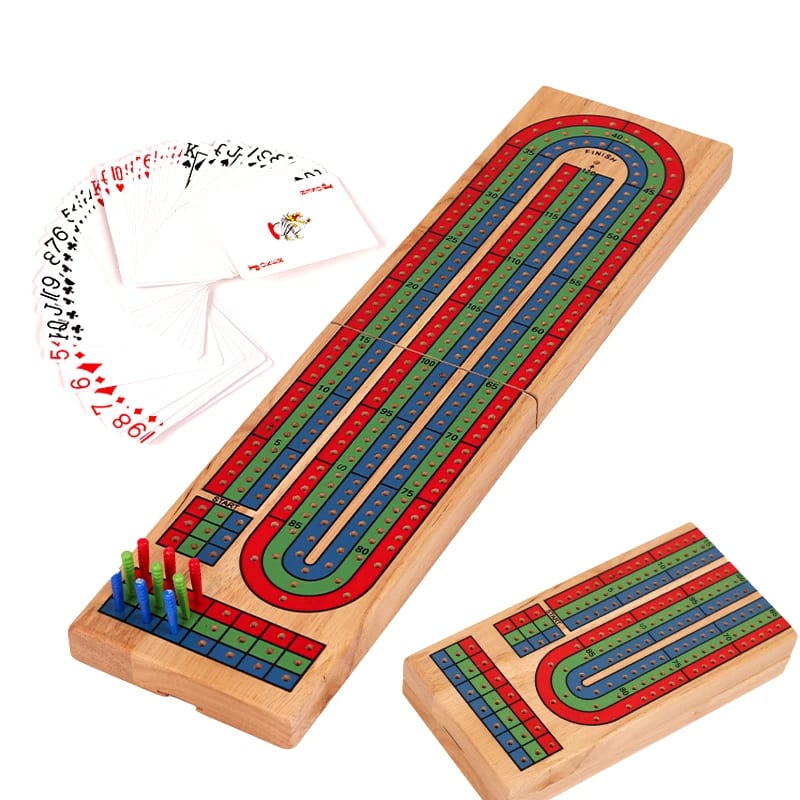
A paper deck lasts a few weeks of nightly gin. A plastic one takes the shuffling, the drinks and the occasional bent corner — and a cribbage board doubles as a fine way to peg the score.