How Does a Newton's Cradle Work? The Physics Explained
Nov 7, 2026 · The Editors
How a Newton's cradle works: momentum and energy, why one ball in sends exactly one ball out, why it slows and stops, what happens with two or three balls, who invented it, and how to set one up.
Lift the end ball of a Newton's cradle, let it go, and something strange happens: it strikes the row and stops dead, while the ball at the far end flies out to almost the same height. The balls in the middle hardly seem to move. Here is what is going on.
The short answer
When the first ball hits, its momentum and its energy travel through the row as a pressure wave, ball to ball, in a fraction of a millisecond. The only way for both momentum and energy to come out the other end intact is for one ball, at the same speed, to leave from the far side.
Two things that must be conserved
Every collision obeys two rules:
- Momentum is conserved. Momentum is mass times velocity. The total before the collision equals the total after.
- Energy is conserved. With hard steel balls, nearly all the movement energy survives the collision — the collision is almost elastic.
Suppose one ball hits at speed v. Could two balls leave at half the speed? That keeps the momentum the same (2 × ½v = v) — but the kinetic energy depends on speed squared, so two balls at half speed carry only half the energy. Energy cannot vanish, so that cannot happen. Only one ball out, at the original speed, satisfies both rules.
Why the middle balls stay still
The middle balls do move — by a microscopic amount. The impact compresses each ball slightly, and that compression travels through the row like a sound wave through steel. Each ball passes the push to the next and comes to rest. When the wave reaches the last ball, there is nothing beyond it to pass the push to, so it swings out.
Two balls in, two balls out
Lift two balls and release them together: two balls swing out the other side. Three in, three out. With five balls, lift three and something lovely happens: three swing out the far side — including the middle ball, which ends up swinging on both sides in turn.
Why does it stop?
A real cradle is not perfect. Each collision loses a little energy as:
- Sound — the click.
- Heat inside the balls.
- Air resistance and friction in the strings.
Gradually, the balls start moving together in a group, swinging as one, and finally stop. A good steel cradle keeps going for a surprisingly long time.
Who invented it?
Not Isaac Newton. It is named after him because it demonstrates his laws of motion. Scientists in the 1600s — including Christiaan Huygens and Edme Mariotte — studied colliding pendulums and described the effect. The desk toy as we know it was popularised in 1967 by the English actor Simon Prebble, who gave it the name "Newton's cradle". It became the defining executive desk toy of the 1970s and 80s.
Setting one up
If the balls do not swing cleanly, they are not aligned. Each ball should hang at exactly the same height, touching its neighbours, in a straight line. Adjust the strings until they are even. Misalignment is why many cheap cradles clack once and fall into a messy swing.
On the desk
A Newton's cradle is still the perfect thing to have on a desk: silent until touched, impossible to walk past, and a physics lesson in every click. More desk toys for adults · Executive desk toys.
Mentioned above
Products in this guide
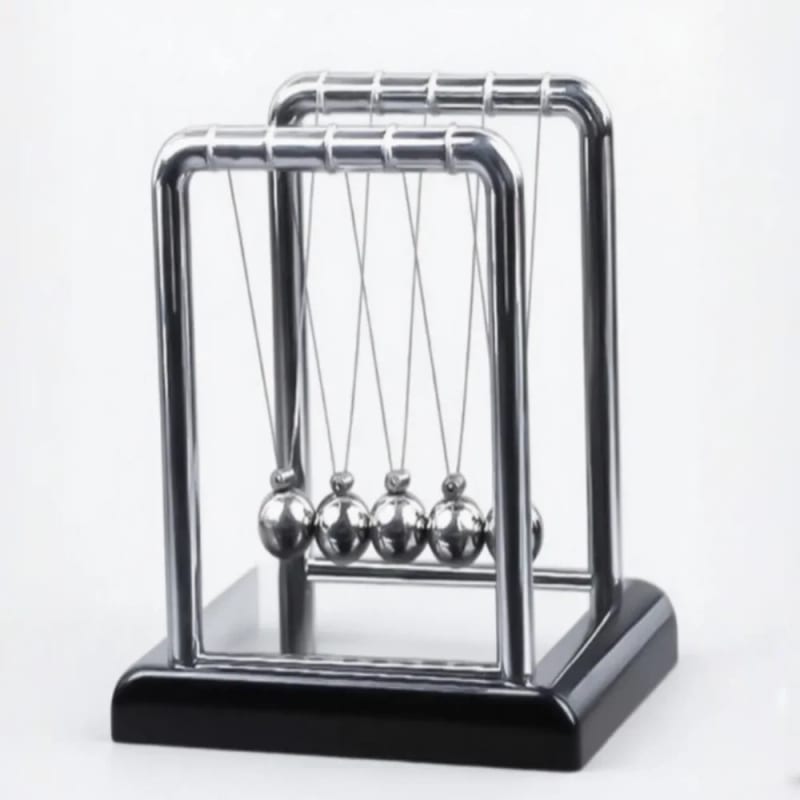
Newton's Cradle — Steel Balls, Desk Size
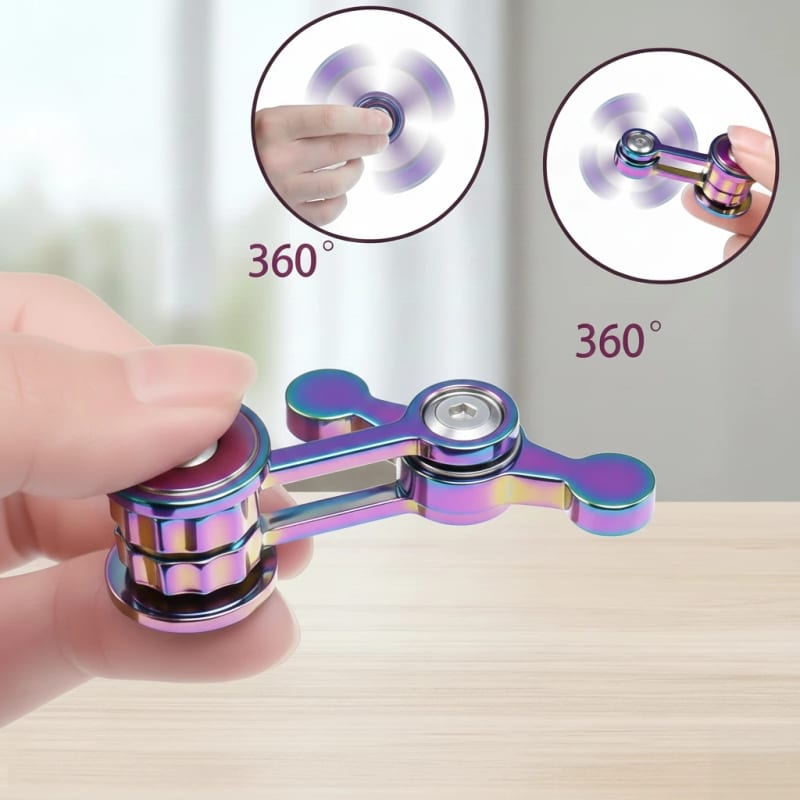
Chaos Pendulum Fidget Spinner — Metal, Iridescent
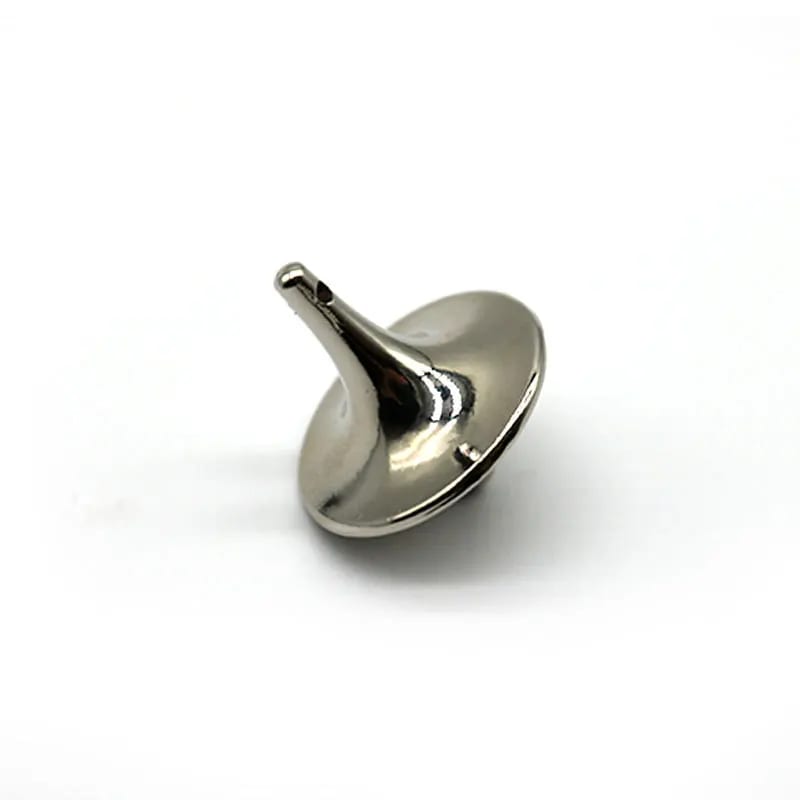
Metal Spinning Top — Silver, Precision Desk Top
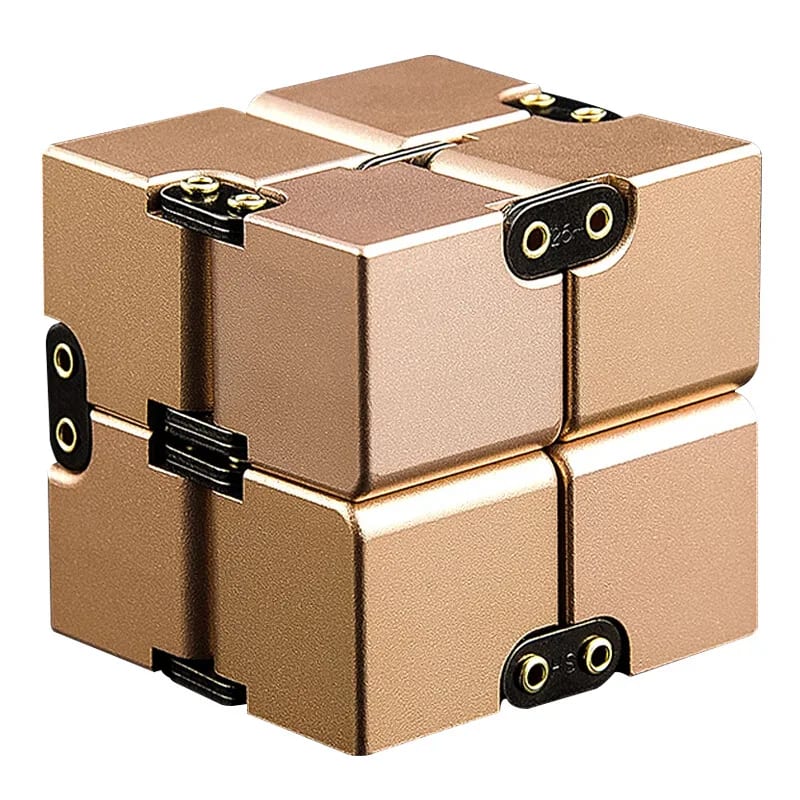
Infinity Cube — Aluminium, Gold