Farkle Rules: How to Play and Score the Dice Game
Nov 5, 2026 · The Editors
How to play Farkle with six dice: rolling, setting aside scoring dice, hot dice and farkles, a full scoring chart, the common house rules, and playing with five dice.

Farkle is a push-your-luck dice game for two or more players. Each turn you roll six dice, set aside the ones that score, and decide whether to bank your points or roll the rest again — knowing that one roll with nothing in it wipes out the whole turn. First to 10,000 wins.
It takes a minute to learn. The only thing to check before you start is which scoring your table uses, because Farkle has more house rules than almost any game. The chart below is the most common one.
What you need
- Six standard dice. Farkle is a six-dice game; many dice cups come with five, so count them.
- A cup to roll from, which keeps the dice on the table and the noise down.
- Paper and a pencil to keep score.
How a turn works
- Roll all six dice.
- Set aside at least one scoring die or combination. You must set aside something that scores (see the chart). You may set aside more than one.
- Decide: bank the points you have set aside this turn and pass the dice, or roll the remaining dice to try for more.
- Keep going as long as each roll gives you something to score. Each time, set aside at least one scoring die and choose again.
- Farkle: if a roll contains nothing that scores, that is a farkle. You lose every point you set aside this turn, and the dice pass to the next player.
Points only count once you choose to stop and bank them.
Hot dice
If every one of your six dice has been set aside as scoring, you have hot dice: pick all six up and keep rolling, adding to the same turn's total. Hot dice can happen more than once in a turn — and a farkle still loses the lot.
Farkle scoring chart
| Roll | Points |
|---|---|
| Each 1 | 100 |
| Each 5 | 50 |
| Three 1s | 1,000 |
| Three 2s | 200 |
| Three 3s | 300 |
| Three 4s | 400 |
| Three 5s | 500 |
| Three 6s | 600 |
| Four of a kind | 1,000 |
| Five of a kind | 2,000 |
| Six of a kind | 3,000 |
| A straight, 1–2–3–4–5–6 | 1,500 |
| Three pairs | 1,500 |
| Four of a kind plus a pair | 1,500 |
| Two sets of three of a kind | 2,500 |
A combination only counts within a single roll. Two 4s now and another 4 on the next roll are not three of a kind. 2s, 3s, 4s and 6s score nothing on their own.
Winning
Play continues until someone banks 10,000 points. Every other player then gets one final turn to beat that total, and the highest score wins.
Common house rules
Agree on these before the first roll:
- Getting on the board. Many tables say you must bank at least 500 points in a single turn before your score starts counting.
- Doubling three of a kind. An older style of scoring makes four of a kind double the three-of-a-kind value (four 5s = 1,000), five of a kind double again, and so on — instead of the fixed 1,000 / 2,000 / 3,000 above.
- Three 1s worth 300 instead of 1,000.
- Three farkles in a row cost a 1,000-point penalty.
- Different targets. Shorter games play to 5,000.
None of these is wrong. Pick one set, write it at the top of the score sheet, and stick to it.
Farkle with five dice
You can play with five dice — a popular variant, and the way some dice cups come. The turn works the same. Without a sixth die, six of a kind, three pairs and two sets of three of a kind cannot happen, and most tables score a small straight (1–2–3–4–5 or 2–3–4–5–6) at 500 or 750 and drop the full straight. Hot dice means all five scoring.
A word on strategy
The whole game is the decision to stop. With six dice to roll the chance of a farkle is small, so it is usually worth rolling again; with one or two dice left it climbs steeply, and banking is often the better play. Players who never stop lose turns; players who always stop fall behind.
Our Farkle set
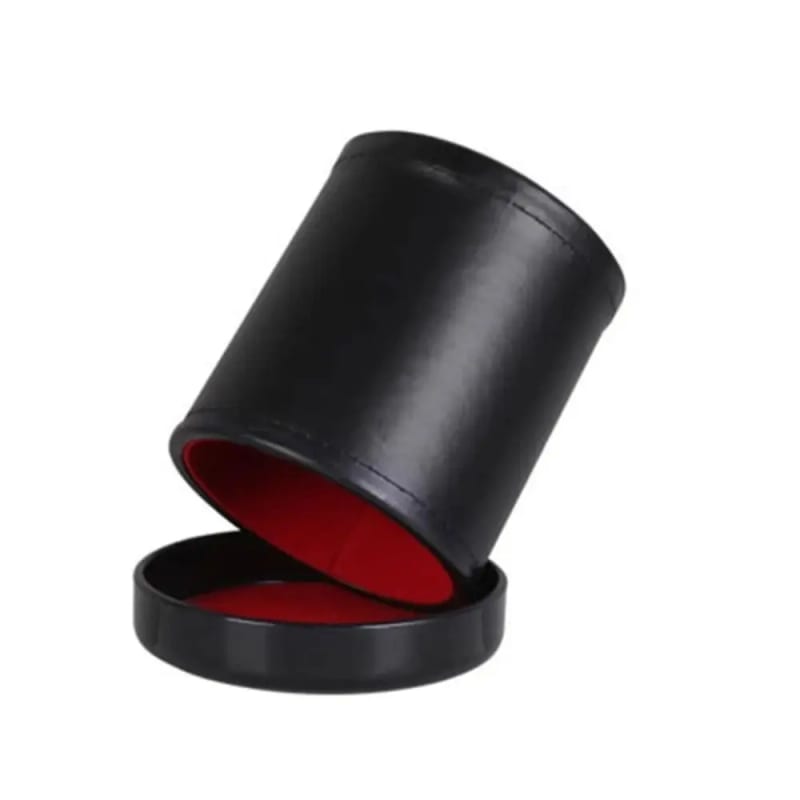
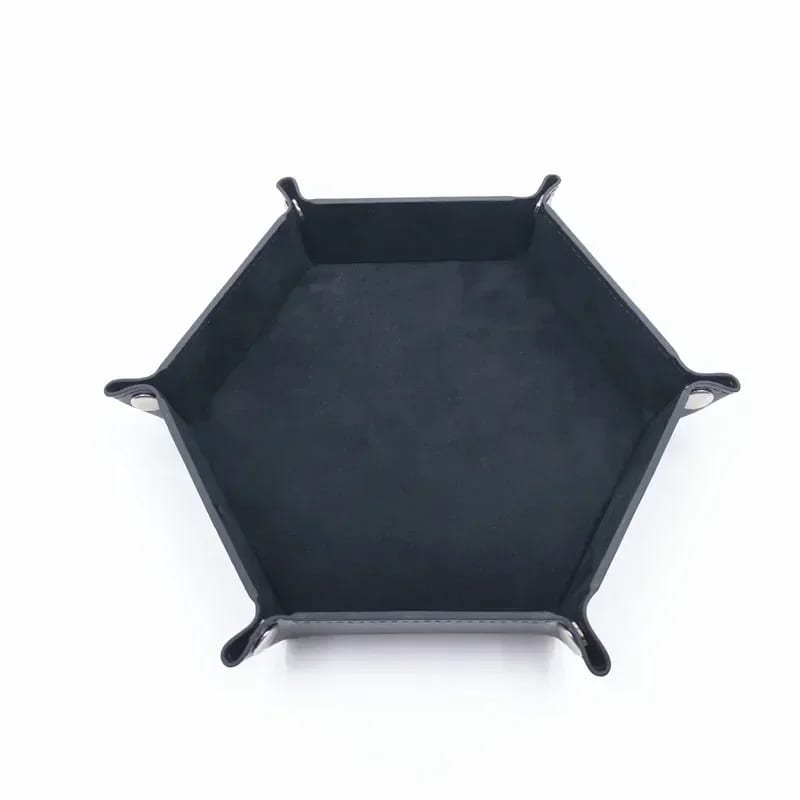
Our Farkle dice set has everything the game needs: a black cup with a red felt lining that keeps the shake quiet, and the full six dice. Add a folding dice tray and the dice stay on the felt instead of under the sofa.
Mentioned above