Cribbage Strategy for Beginners: Discarding, Pegging and Tips
Nov 23, 2026 · The Editors
Most cribbage games are won in the discard and the pegging. Beginner strategy for what to throw to your crib and your opponent's, how to lead, and when to play defence.
Good cribbage strategy comes down to three things: discard to help your own crib and starve your opponent's, lead safely in the pegging, and know when to attack or defend on the board. Beginners lose most of their points by throwing 5s into the other player's crib and by leaving easy 15s and 31s in the pegging. Fix those and you will win far more often.
If you need the rules first, start with how to play cribbage, then how to count cribbage hands.
Cribbage strategy for discarding
Every hand starts with a choice: which two cards to throw to the crib. It depends on whose crib it is.
When it is your crib, throw cards that score together:
- 5s, since sixteen cards in the deck are worth ten and make 15 with a 5.
- Pairs, and cards that make 15 together (7 and 8, 6 and 9).
- Touching cards (6 and 7) that may form a run with the starter.
When it is your opponent's crib, throw cards that do not work together:
- Never give them a 5 if you can avoid it.
- Avoid pairs, 15s and touching cards.
- Wide gaps are safest: a king and a 2, or a queen and a 3. Kings are especially safe, because nothing can be added above them to make a run.
Above all, keep the four cards that score best for you. A strong hand is usually worth more than a perfect crib throw.
Cribbage pegging strategy
In the play, you score for making 15 or 31, pairs, three or four of a kind, and runs.
- Lead with a card under 5. If you lead a 4 or lower, your opponent cannot make 15 with one card.
- Don't lead a 5. Any ten-value card lets your opponent make 15 for two points.
- Lead from a pair. If they pair your card, you can play the other for three of a kind (six points).
- Avoid leaving a count of 5 or 21. A ten-card brings it to 15 or 31.
- Think twice before pairing. It scores two, but invites three of a kind.
- Save low cards for the end of a count, to slip in under 31 or claim the go.
Playing to the board
Once you know the basics, start playing to the board: adjusting your play to the score.
- When you are ahead, play defensively: keep the count away from easy points and throw safe cards to your opponent's crib.
- When you are behind, take risks: keep hands with more potential, and peg aggressively.
- Near the end, count what each of you needs. The non-dealer counts their hand first, which can decide a close game.
A game is 121 points. Finishing before your opponent reaches 91 is a skunk, which many players count as a double game.
Quick strategy checklist
| Situation | Do |
|---|---|
| Your crib | Throw 5s, pairs, 15s, touching cards |
| Opponent's crib | Throw wide gaps; never a 5 |
| Leading the play | Lead a 4 or lower, or from a pair |
| Count at 5 or 21 | Avoid leaving it there |
| Ahead late | Play safe |
| Behind late | Take the risky keep |
Equipment that helps
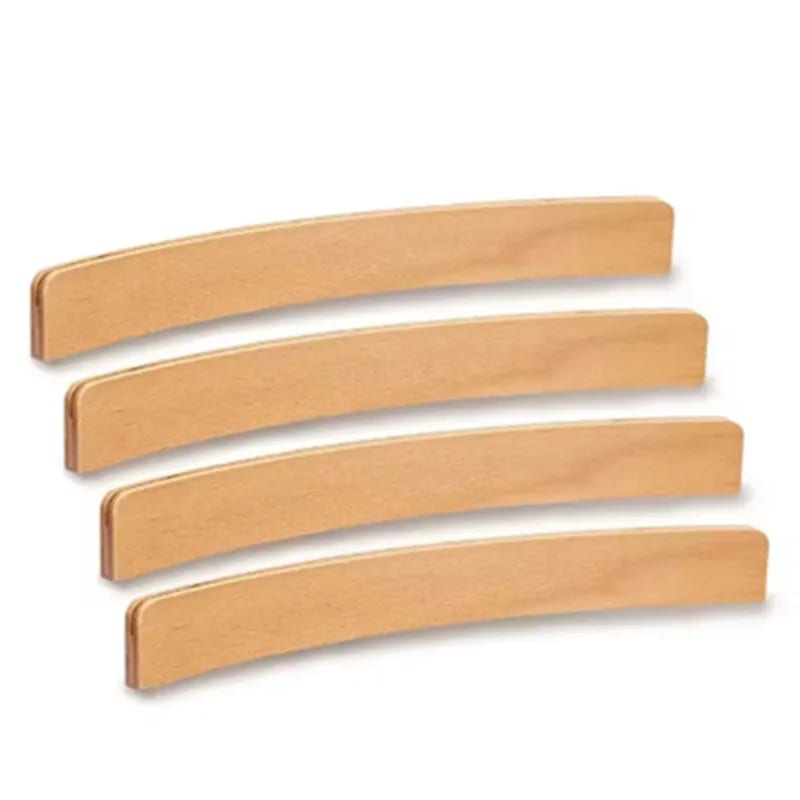
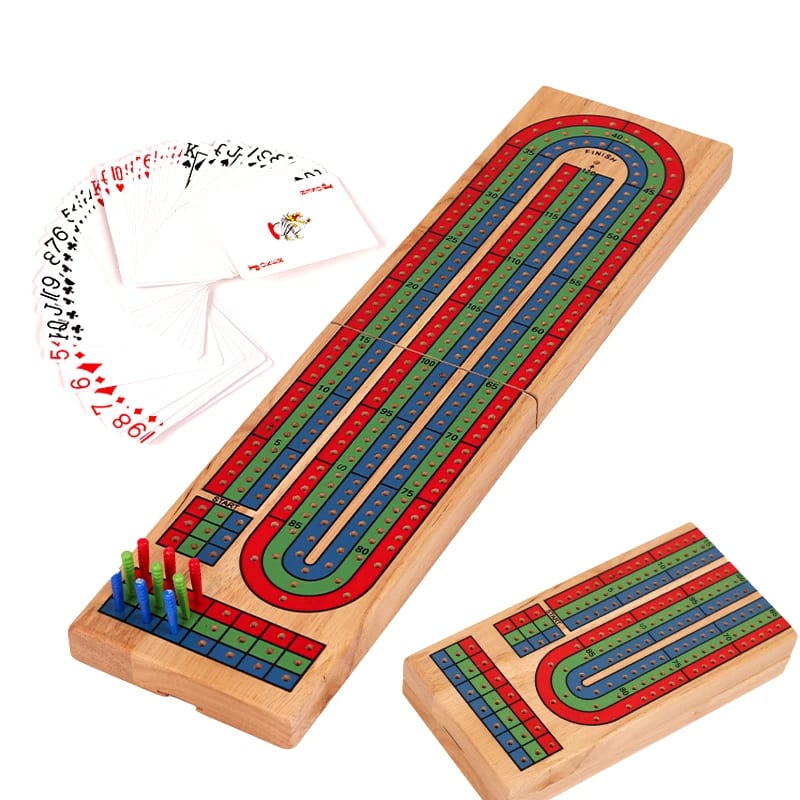
A folding three-track cribbage board comes with cards and pegs, and suits cribbage for 3 players as well as two. For long sessions, wooden card holders keep your hand upright. Cribbage players make good gift recipients too; see gifts for cribbage players.
Frequently asked questions
What is the best strategy in cribbage?
Keep the four cards that score best for you, throw 5s and pairs to your own crib but never to your opponent's, and lead low cards in the pegging.
What should you lead with in cribbage?
A card under 5, so your opponent cannot make 15 with one card, or a card from a pair so you can answer a pair with three of a kind.
What should you not throw in your opponent's crib?
Avoid 5s, pairs, cards that make 15 and touching cards. A king with a low card is a safe throw.
What is a skunk in cribbage?
Winning before your opponent reaches 91 points. Many players count it as two games.